The Scottish Lieutenant Who Witnessed the Compassion of a Turkish Soldier
Mehmet Bayer, 24 April (Hibya) – This year marks the 111th anniversary of the Gallipoli Land Battles. In the memoirs of Lieutenant James Caldwell Bowie, who participated on behalf of the United Kingdom from Scotland, one particular event he witnessed during the Kerevizdere Battles held a special place.
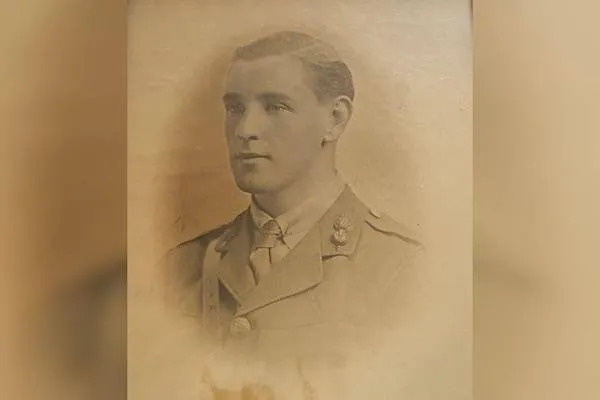
Born on July 6, 1895, in the Ayrshire region of Scotland, near Kilmarnock at a family farm called “Overland,” Bowie joined the Royal Scots Fusiliers (RSF) as a lieutenant in 1914 when war was declared on Germany.
During World War I, as was common throughout the United Kingdom, Bowie’s unit was composed of soldiers from the local area. Therefore, all 850 soldiers in his battalion (4th Royal Scots Fusiliers) consisted of friends, relatives, and neighbors who knew each other.
“My grandfather was a very lucky man”
James Bowie, the grandson who shares the same name as Lieutenant James Caldwell Bowie and lives in Australia, told a HİBYA correspondent that within the family, stories were passed down through generations emphasizing the heavy casualties of World War I and how important luck and fate were for survival.
Stating that his grandfather was a very lucky man, Bowie said:
“He survived the Gallipoli campaign. Later, he also managed to survive while serving in the Royal Flying Corps. At that time, the chances of survival in those units were even lower than in the infantry. It was also a great stroke of luck that he was not on the train carrying parts of the RSF unit to Liverpool. That train collided with another at Quintinshill, and 226 soldiers died before even leaving England.”
He explained that his grandfather, who boarded a different train, departed Liverpool on May 11, 1915, aboard the ship SS Mauretania, reached the shores of Gallipoli on June 6, and took part in the landing at Cape Helles (Seddülbahir region) on June 8. He shared the following from the memories he heard:
“The thing I remember most from my grandfather, which I heard as a small child, was how completely confusing the first major attack was. By the end of the day, out of the 850 men who advanced, he was the only officer left, and only about 200–250 soldiers remained capable of fighting. He also said that when their battalion merged with the 5th RSF, their total strength reached only about half. In other words, they started the day with around 1,800–1,900 soldiers, but by the end of the first attack, only 400–500 remained able to fight.”
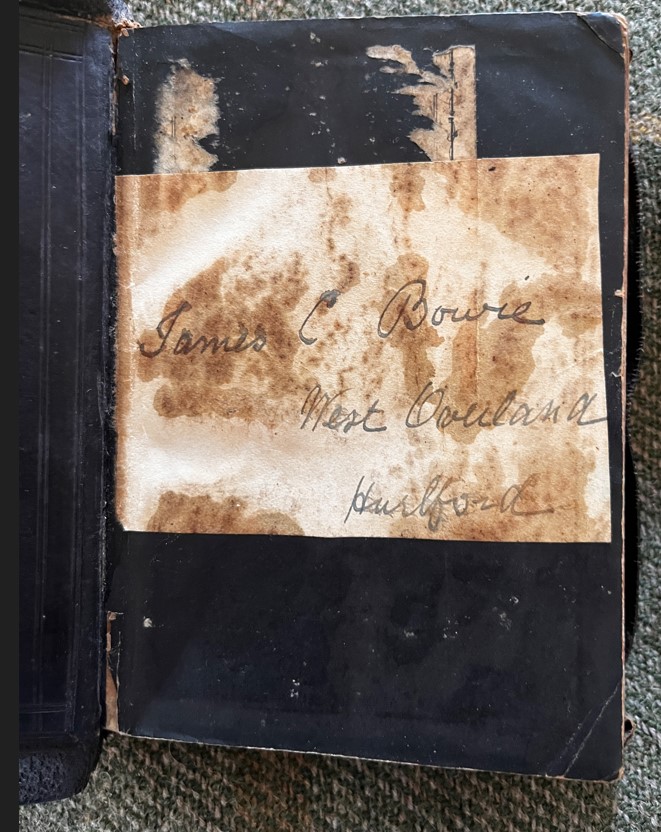
James Bowie stated that, considering memories might have been altered over time, he felt the need to verify them by consulting a book given to his grandfather that detailed the history of the division his unit belonged to.
He said the book was titled “Fifty Second (Lowland) Division 1914–1918” by Lieutenant Colonel R. Thompson and added:
“This book was written after World War I to honor the soldiers who served and died in that division. Unfortunately, it not only confirmed what my grandfather said but also showed that the situation was far worse than he described. As stated in the book, the first major attack of the 4th Battalion of the Royal Scots Fusiliers took place on July 12–13. Similar to what I heard from my grandfather, the attack had actually begun the day before at 15:45. The French had carried out several hours of artillery bombardment to ‘soften up’ the Turks.”
The attack on July 12
According to regimental records, July 12 began with a cloudless sky and bright sunshine, and morale among the soldiers was extremely high. Bowie said:
“At 04:30, French artillery opened fire, hitting Turkish trenches and the slopes of Achi Baba (Alçıtepe) with high-explosive and shrapnel shells. The area was covered in clouds of dust and smoke. Turkish artillery responded, causing heavy casualties.”
He added that at 07:30 the French artillery ceased fire and the Royal Scots Fusiliers advanced with cheers, noting that the following excerpt from the book explained everything clearly:
“No one who has not witnessed it can imagine how a strip of land about 400 meters wide turned into a boiling hell. Rifle and machine-gun bullets tear up the ground, whiz past your ears, or ricochet off stones. Shrapnel bursts in the air, bullets strike the earth violently. The ground is ripped apart by huge craters, boards, sandbags, clods of earth, and large jagged pieces of steel are hurled into the air. The noise is indescribable—a continuous, deafening roar that shatters the nerves. The drifting smoke clouds only allow glimpses of this cursed hell at intervals.”
Bowie explained that, as described in the book, the Royal Scots Fusiliers began suffering heavy losses from the very start:
“Of the 13 officers of the 4th RSF who took part in the assault, 12 were killed along with most of the soldiers before even capturing these two short trench lines. My grandfather was the ‘lucky’ 13th officer who survived. Unfortunately, this account confirmed the casualty figures my grandfather had given. It also suggests that what he said was probably true—that by the end of the battle, only about 12 of the original 850 soldiers were still capable of fighting.”
The compassion of the Turkish soldier
James Bowie noted that despite the terrible losses his comrades suffered, his grandfather always spoke respectfully and with admiration about Turkish soldiers.
He said one story his grandfather told, which he still remembers, revealed not only how important luck was in war but also how even enemies could show compassion:
“In this incident, my grandfather said that while he was standing with another man, a bomb fell between them. The shrapnel from the explosion whistled past my grandfather without hitting him, but tore into the body of the soldier next to him, causing his intestines to spill out. Normally, he had no chance of survival. According to my grandfather, the first aid station was very close—probably less than 80 meters away in a straight line across open ground. However, due to the complex structure of the trenches, it would take too long to reach it, and he would not survive such blood loss.”
Despite his severe injury, the soldier reportedly pushed his intestines back into his abdomen with his hand, climbed out of the trench, and ran directly toward the first aid station—fully exposed and in clear view of the Turkish soldiers who had just thrown the bomb.
“This soldier could have been an easy target. But my grandfather said the Turks showed compassion and allowed him to pass safely. Amazingly, that soldier survived his wounds.”
A 111-year-old Bible and blanket
Bowie said his family still takes great pride in his grandfather’s service to his country.
Emphasizing that his grandfather always spoke of the pain of losing his friends and was extremely patriotic, Bowie said:
“He passed this feeling on to my father. My father later served as a surgeon in the Royal Army Medical Corps and then emigrated to Australia in 1966, where he worked for one year in a surgical team during the Vietnam War.”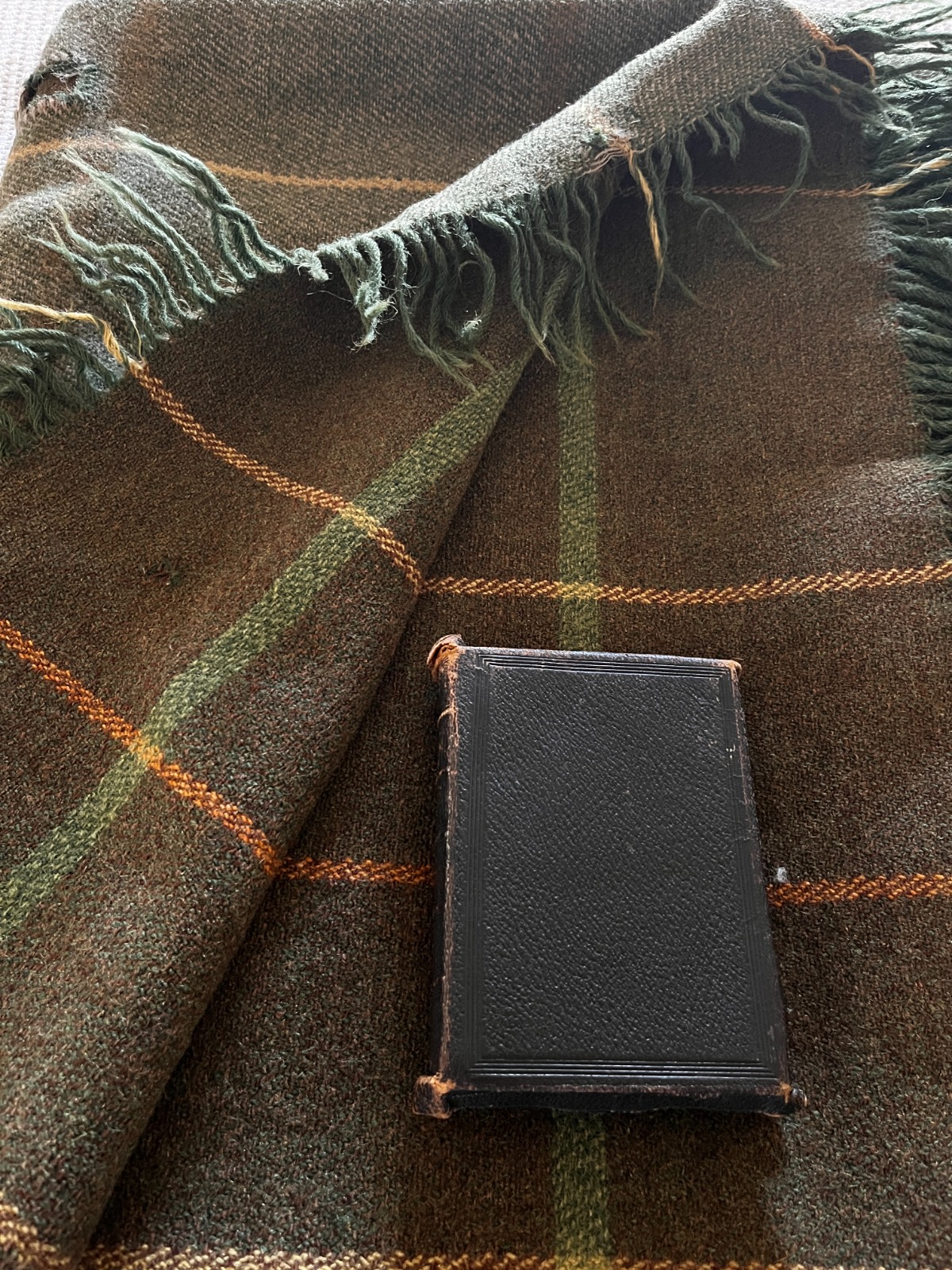
He added that his grandfather’s uniform, the blanket he used at Cape Helles, and the Bible given to him by his grandparents before going to war have all been preserved by the family.
Stating that his grandfather carried this Bible throughout the war and that it still bears water stains from the rains of Gallipoli, Bowie said: “Every year on April 25, Australia commemorates the Gallipoli campaign with a dawn ceremony called Anzac Day. My father always considered it very important to attend these ceremonies, and we try to continue this tradition. Many times, my father took my grandfather’s Bible and blanket to Anzac ceremonies. That blanket was even used to keep my son warm during the cold dawn hours when we attended moments of silence.”
Bowie concluded by saying that they still cannot understand how his grandfather was so lucky, sometimes wondering whether that luck came from the Bible he carried or from his faith in God and his country, adding that they will never know—but these items will always remain very valuable to their family.
Eu Day Light
 Facebook
 Tweeter
 Whatsapp